Arnica Flowers
Bright yellow mountain flowers with a long history in folk tradition, arnica is one of those herbs you keep on hand for its uses outside the kitchen.
What It Is
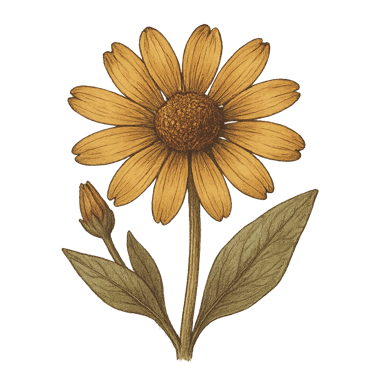
Arnica montana grows wild across mountain meadows in Europe and Siberia, and its daisy-like flowers have been used in folk practice for centuries. It has a sharp, faintly resinous scent and a striking golden color that made it a fixture in traditional herbalism long before it showed up in modern preparations.
Arnica is not a culinary herb. It is not used in food or drink. Homeopathic and topical traditions surround it, but it is not safe to eat or steep as a tea. Keep that boundary clear, and you have a genuinely useful herb to have around.
What To Do
This one stays out of the kitchen entirely. Arnica flowers are used externally in folk tradition, often infused into oils or salves for topical use. A simple arnica-infused oil can be made by packing dried flowers into a clean jar, covering completely with a carrier oil like olive or jojoba, and letting it sit in a warm spot for four to six weeks before straining.
Store dried flowers in a sealed container away from light and heat. Keep out of reach of children, and do not use on broken skin. If you are new to working with arnica, a quick read before you start goes a long way.