
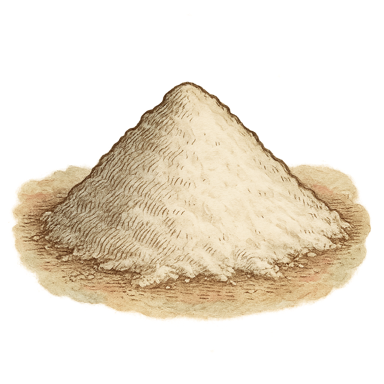
Baking Soda
One ingredient, two tricks: baking soda makes your baked goods rise and your pan sauces lose that sharp edge. It is the workhorse of the baking shelf.
What It Is
Pure sodium bicarbonate, nothing else. No aluminum compounds, no additives. Baking soda is a base, and it needs an acid in the recipe to do its job. Buttermilk, yogurt, lemon juice, vinegar, brown sugar, even cocoa powder will set it off, producing bubbles that lift batter before the oven sets it.
It has been a kitchen staple since the mid-1800s, and for good reason. A little goes a long way, it costs almost nothing, and it does not leave a metallic taste when used correctly.
What To Do
Most recipes call for about one quarter teaspoon per cup of flour. Too much and baked goods taste soapy, so measure carefully rather than eyeballing it. Combine it with your dry ingredients before adding wet ones so it distributes evenly. It also has uses beyond baking: a pinch stirred into tomato sauce softens acidity, and a small amount added to the water when cooking dried beans can speed things up.
Store it somewhere dry, away from steam. To test if yours is still active, drop a half teaspoon into hot water with a splash of vinegar. If it bubbles vigorously, it is good to go.