
Celtic Sea Salt
Salt harvested from tidal flats along the French Atlantic coast, still moist from the sea, with a mineral depth that plain table salt simply does not have.
What It Is
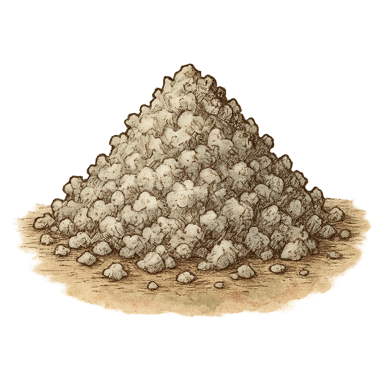
Celtic sea salt comes from the coastal marshes of Brittany, where shallow clay-lined ponds trap seawater and let it evaporate slowly in the wind and sun. Workers rake the crystals by hand before they sink to the bottom, which is why this salt stays slightly damp and clumps a little in your hand. That moisture is not a flaw. It carries trace minerals that give the salt its pale grey color and a flavor that is round and faintly briny rather than sharp.
The crystals are medium-coarse and irregular. Because it is not processed or free-flowing, it behaves differently than table salt. A pinch is a real pinch, and it dissolves a little more slowly, which makes it easier to season with control.
What To Do
Use it the way you would any good finishing salt: crumbled over roasted vegetables, eggs, grilled meat, or a slice of good bread with butter. The coarse texture and slow dissolve make it satisfying to season with your fingers. For baking or anywhere you need salt to disappear into a dough or batter, grind it first in a mortar or give it a few pulses in a spice grinder.
Because it holds moisture, store it in a sealed container away from steam. A small pinch bowl next to the stove works well for everyday cooking. It will not pour like table salt, so plan on using your hands.