
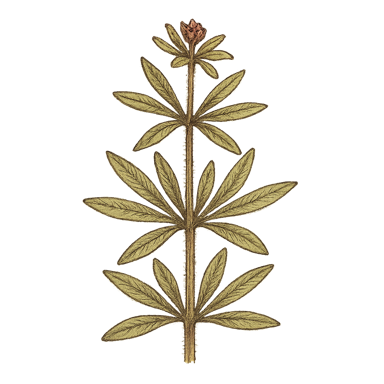
Cleavers
Cleavers is the sticky, scrambling weed you probably pulled off your socks as a kid. Turns out, it has a long history as a spring herb.
What It Is
Cleavers grows wild across North America and Europe, clinging to fences, hedgerows, and the backs of your pant legs with its tiny hooked bristles. It is one of the earliest greens to appear in spring, and foragers have gathered it for centuries. The whole above-ground plant is used, most often steeped in water or pressed into a fresh juice. It has a mild, grassy flavor that is easy to work with.
Traditionally, cleavers was a spring tonic herb, used across folk traditions in Europe and North America after a long winter of heavy, preserved food. It is gentle and unassuming, which is part of why it has stayed in the herbalist's toolkit for so long.
What To Do
The most traditional preparation is a cold infusion: pack cleavers loosely into a jar, cover with cold water, and let it sit overnight in the refrigerator. Strain and drink in the morning. Cold water is preferred over boiling because heat can break down some of what makes fresh cleavers useful.
You can also blend fresh or rehydrated cleavers into green juices or smoothies. Use it young and green for the best flavor. Dried cleavers keeps well stored in an airtight container away from light and heat, and will hold its character for about a year.