
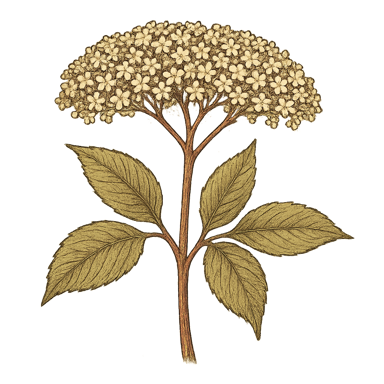
Elder Flowers
Elderflowers are the tiny cream-colored blossoms behind one of Europe's oldest folk drinks, and they taste like spring itself: floral, lightly musky, and faintly sweet.
What It Is
The elder tree blooms in late spring, and for a few short weeks its flat-topped clusters of small white flowers show up in everything from cordials to fritters across Northern and Central Europe. Dried, they hold that honeyed, almost grape-like fragrance well and steep into a pale, delicately scented liquid that has been used in kitchens and home apothecaries for centuries.
Traditionally, elderflower tea was taken before bed as a gentle, calming ritual. In cooking, the flowers are valued for the soft floral note they add to syrups, drinks, and sweets without the perfume-counter punch of something like lavender.
What To Do
To make a simple syrup, simmer equal parts sugar and water, pull it off the heat, stir in a generous handful of dried flowers, and let it sit for twenty minutes before straining. Use that syrup in lemonade, sparkling water, cocktails, or drizzled over fresh fruit. For tea, steep one teaspoon of dried flowers in eight ounces of hot but not boiling water for five to seven minutes.
Elderflowers also work stirred into whipped cream or folded into a light cake batter for a barely-there floral note. Store them in a sealed container away from light and heat, and use within a year for the best fragrance.