
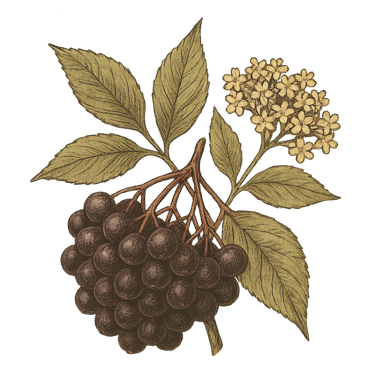
Elderberries
Dried elderberries are the small, dark fruit that home cooks have been simmering into syrups and teas for centuries. Deep purple, tart, and earthy.
What It Is
Elderberries grow on sprawling shrubs across Europe and North America, ripening in late summer into clusters of tiny, near-black fruit. Dried, they keep that deep color and a flavor that sits somewhere between tart cherry and blackberry, with a subtle earthiness underneath.
They are almost always cooked rather than eaten raw. Heat is what brings out their flavor and what traditional recipes have always called for. That tradition shows up in folk syrups, warming winter teas, and old-world jams across many cultures.
What To Do
The most common use is a simple syrup: simmer about a cup of dried berries in three cups of water for 45 minutes, strain out the fruit, and stir in honey once it has cooled a bit. It keeps in the fridge for a few weeks and is good stirred into sparkling water, spooned over oatmeal, or mixed into a cocktail.
For tea, steep a small handful in just-boiled water for ten minutes and strain. Elderberries also work in jam alongside tart apples, and they pair well with cinnamon, clove, and ginger. Store dried berries in a cool, dark spot in a sealed container.