
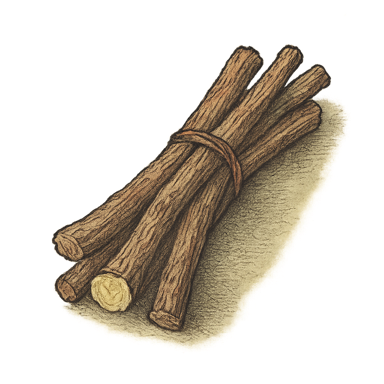
Licorice Root
Licorice root is the actual plant behind that candy-counter flavor, sold here as the dried root you steep, simmer, or blend yourself.
What It Is
This is the woody, dried root of a Mediterranean and Central Asian shrub that has been used in kitchens and folk traditions for thousands of years. The flavor comes from a compound called glycyrrhizin, which is naturally sweeter than sugar but earthy and almost savory at the same time. It tastes like licorice candy the way a real lemon tastes like lemon candy: more complicated, less obvious.
Traditionally it shows up in herbal teas, spice blends, and slow-cooked broths across Chinese, Middle Eastern, and European cooking. It is one of those background ingredients that rounds out bitter or sharp flavors without announcing itself.
What To Do
The easiest use is tea. Simmer one or two small pieces of root in two cups of water for ten to fifteen minutes, then strain. It needs no sweetener. Add a cinnamon stick or a slice of ginger if you want something more complex. It blends well with strong, bitter herbs that need softening.
In savory cooking, a piece of root added to a long-simmering broth or braising liquid pulls the flavors together and adds faint sweetness. Remove it before serving the same way you would a bay leaf. Store the dried root in a sealed container away from light, and it will keep for well over a year.